
| Legal Tenure and How Cohousing Fits by Ronaye Matthew, CDC Cohousing Development Consulting Inc. September 8 2024 Legal Tenure is the conditions under which land or buildings are held or occupied. “Cohousing is not a particular legal form or means of holding interest in real property.” While it may sound technical, this distinction is important because it allows a variety of tenures to be classified as “cohousing” as long as they meet the other characteristics.I recently made a construction financing application for a cohousing project that CDC is supporting. For this project, they are using a co-op ownership structure (tenure). I have worked with this financial representative on multiple projects–to date all were condo/strata. They contacted me after receiving the application and said “I wanted to make sure I am understanding that this is an Equity Coop structure and not cohousing.” Oh my!! They had conflated the term “cohousing” with the legal tenure of a strata/condominium. I found it very helpful to be able to refer to the definition on the CCN website “What is Cohousing” page when I responded to their query. At our CCN board meeting on September 7 we determined that some additions were needed to ensure the definition was crystal clear. We will be adding a downloadable PDF titled “Legal Structures and How Cohousing Fits” and will include the PowerPoint slides from Lysa Dixon’s presentation “Cohousing 101.” The Cohousing Association of the US does not have an easily accessible webpage that provides a clear definition of cohousing. Unfortunately, what I was able to find does not include anything about the tenure in the definition. During one of the presentations at the recent conference (August 2024), the presenter defined cohousing as being homes that are privately owned. When asked for clarification, the presenter responded by saying anything that is not privately owned is called “community housing.” This sounded like co-ops, rentals, or other forms of shared ownership would not be classified as cohousing even if it met all the other characteristics, but that is not clear because there is no clear definition. Financial institutions focus on risk assessment when they look at a project. They are looking for clear, transparent information. When anything is unclear, it adds to the perception of risk. The CCN board is focused on creating as much clarity and transparency as possible on our website so that financial institutions and others can refer to it with confidence. Please do not hesitate to contact CCN at info@cohousing.ca if you find inconsistencies, lack of clarity, or have difficulty accessing the information you need. |
| Le cohabitat et comment il s’insère à l’intérieur d’une tenure légale Le 8 septembre 2024 Ronaye Matthew, CDC Cohousing Development Consulting Inc. La tenure légale est la condition par laquelle un terrain et des bâtiments sont gérés et occupés.Le cohabitat n’est pas une forme juridique particulière, ou un moyen de détenir un intérêt dans un bien immobilier. Même si cela paraît très technique, la distinction est importante à faire, parce qu’elle permet à une variété de statuts de tenure d’être classés comme “cohabitat”, en autant qu’ils répondent aux autres critères.J’ai récemment fait un montage financier pour un projet de Cohabitat constitué en copropriété, lequel bénéficiait de l’appui du CDC. J’ai travaillé avec des financiers sur de multiples projets et à ce jour, tous ces projets étaient des condominiums avec des titres de copropriétés. On me contactait fréquemment, quand je soumettais un montage, pour s’assurer que je savais qu’une structure coopérative n’était pas un cohabitat…Surprenant pour le moins, car ces financiers confondaient le terme cohabitat avec une tenure légale de condominiums, portant le titre de copropriétés. J’ai trouvé pertinent de les référer alors, à la définition citée sur le site Internet du CCN: “Qu’est-ce que le cohabitat? ”.Lors de notre conseil d’administration du 7 septembre dernier, il a été décidé que nous avions besoin que cette définition soit encore plus claire. Un document PDF intitulé: “Legal Structures and How Cohousing Fits” (Les structures légales et où se situe le cohabitat), pourra prochainement être téléchargé et nous allons également inclure le PowerPoint qu’utilise Lysa Dixon’s dans sa présentation “Cohousing 101.” Le cohabitat aux États-Unis n’a pas un site Internet où on trouve une définition claire du cohabitat. Lors d’une conférence à laquelle j’assistais en août 2024, le présentateur définissait le cohabitat, comme un “ensemble de maisons qui appartiennent à des propriétaires privés”. Quand on lui a demandé de clarifier, il a répondu: “quand ce n’est pas une propriété privée, il s’agit de logements communautaires”, comme si une coop, un loyer ou autre formes de partages de propriétés, ne se qualifiait pas comme ‘cohabitat’, même si ces habitations répondaient à tous les critères. Cette méprise est dûe en grande partie au fait qu’il n’existe pas de définition claire du cohabitat.Lorsqu’un projet est présenté à une institution financière, on se concentre de faire une évaluation de risque. On recherche des informations claires, parce qu’il n’y a rien de pire que la confusion, pour faire penser qu’il y a effectivement un risque. Le conseil d’administration du CCN, s’efforce de publier sur son site Internet des informations transparentes et claires, afin que les institutions financières et autres organismes puissent s’y référer en toute confiance. N’hésitez pas à contacter le CCN à info@cohousing.ca, si vous constatez des incohérences, un manque de clarté, ou si vous avez de la difficulté à accéder à l’information dont vous avez besoin. |
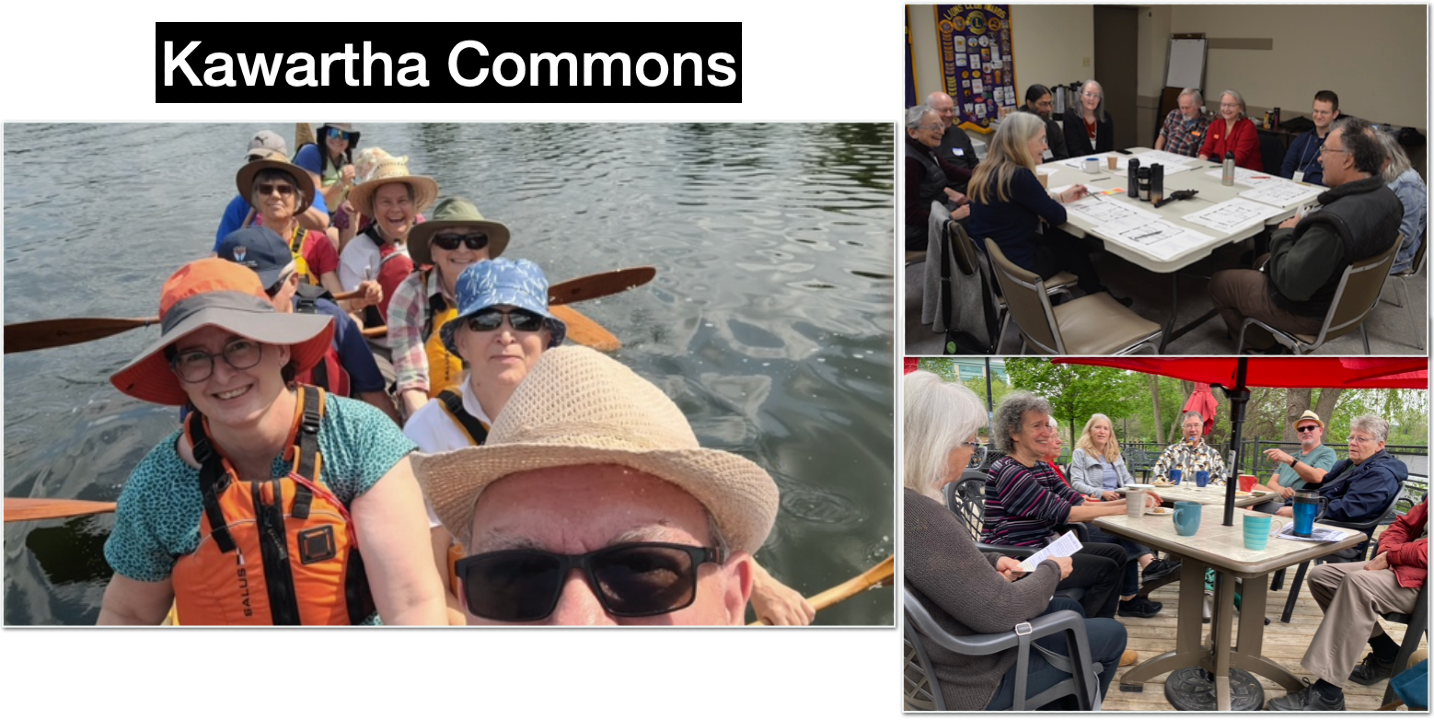 |
| Community Highlight: Kawartha Commons Kawartha Commons has been working to create a sustainable cohousing community in Peterborough, Ontario. They have found a great property: an amazing site right in Peterborough that’s a 10 min bike ride from downtown and near public transit, grocery stores, schools, and the hospital. The property has never actually been built on before. It’s a 1.4 acre plot that served as the gardens for a former convent! They’re planning on preserving as many of the trees as they can and creating walking paths leading between some manicured spaces and areas left wild.CCN talked to Myra, one of Kawartha Commons Cohousing’s equity members. Myra has known about cohousing for a long time–she read Creating Cohousing by Katie McCamant and Charles Durrett years ago–and has explored a couple of different cohousing communities. Growing up in New York, Myra’s family had a cottage in a co-op community upstate. It started as a camp in the 1940s and then became a housing community with a ‘common house’, a communal workshop, and daycare. She grew up spending part of her summers living in that kind of community and loved the experience. She and her husband are excited about Kawartha Commons because they specifically wanted an urban cohousing community where they can walk or bike to downtown and be in the heart of things! Kawartha Commons has both an architect and a builder and has plans for a multi-unit building that will have approximately 40 member households. The mayor of Peterborough is supportive and they are working through the various rezoning processes within the city. They are also applying to a new federal program designed to help fund co-op projects. If accepted, this would convert Kawartha Commons into a co-op rental model and would make their project more affordable. Kawartha Commons currently has ten equity member households and is looking for more people who are interested in becoming a part of their vibrant community! They hold monthly zoom sessions with lots of information (and time for questions) about cohousing in general and Kawartha Commons specifically, The next info session will be Thursday October 17.While working through the next stages on the way to construction, the group keeps the community humming with monthly meetups at a local cafe, dinner get togethers, and a book club, as well as quarterly “Super Weekends” where they schedule a weekend full of activities, like a walking tour of Peterborough, visits to art exhibits and theatre, potluck dinners, bonfires, and lots of opportunities to build community. Members, associate members, and people who are exploring membership are all invited! Their next Super Weekend is scheduled for October 18-20.If your community has recently reached a milestone and would like to be featured, please reach out to Christine. |
| Kawartha Commons œuvre sans relâche, afin de créer une communauté de Cohabitat durable, à Peterborough, en Ontario. Situé à 10 minutes en vélo du centre-ville et à proximité des transports en commun, des épiceries, des écoles et de l’hôpital, le site est simplement incroyable ! Il s’agit d’un terrain de 1,4 acres, qui servait auparavant de jardin à un ancien couvent. Le projet entend conserver autant d’arbres que possible et créer des sentiers pédestres; on veut également laisser des zones à l’état sauvage. CCN s’est entrenu avec Myra, l’une des membres de Kawartha Commons Cohousing. Myra est très au fait du concept ‘Cohabitat’ et ce, depuis longtemps. Il y a quelques années, elle avait lu l’ouvrage, ‘Créer un cohabitat’ de Katie McCamant et de Charles Durrett. Ayant grandi à New York, la famille de Myra possédait un chalet, faisant partie d’une coopérative du nord de l’État. D’un simple camp de vacances dans les années 1940, l’endroit s’est transformé en une réelle communauté d’habitation, avec une « maison commune », un atelier et une garderie. Elle y a grandi, passant une partie de ses étés et a adoré l’expérience. Myra et son mari se sont pris d’affection pour Kawartha Commons, qui représente tout ce dont ils désirent: une communauté urbaine, où ils peuvent marcher, se rendre au centre-ville en vélo tout en étant au cœur de l’animation ! Kawartha Commons peut déjà compter sur les services d’un architecte et d’un constructeur; des plans ont déjà été réalisés pour construire un immeuble à logements qui accueilleront 40 ménages. Le maire de Peterborough est favorable à ce projet, ce qui facilite le travail devant être fait en termes de zonage. Une demande a été déposée auprès du gouvernement fédéral dans le cadre d’un programme pour aider à financer des projets coopératifs. Si cette demande est acceptée, Kawartha Commons se transformerait en un modèle de location coopérative, rendant le projet encore plus abordable.En attendant la construction de Kawartha Commons, la communauté organise des rencontres tous les mois et des dîners; elle a même un club de lecture ! Des « super week-ends » trimestriels sont organisés, comme une visite à pied de Peterborough, des visites d’expositions d’art et des sorties théâtre, des dîners-partage, des feux de camp, ainsi que de nombreuses autres occasions de renforcer les liens de la communauté. Les membres, les membres associés et les personnes qui envisagent de devenir membres sont tous invités ! Leur prochain super week-end est prévu du 18 au 20 octobre 2024. |
To see community updates, please read the full newsletter!
Never miss an issue of the CCN Newsletter! Subscribe here!

